 By
By You must know that a CIPD qualification can help you move forward with your HR and L&D career, but now comes the CIPD profession map. It is the framework of standards that aims to guide professionals working in this field. It actually tells them the skills required and the skills they need to enhance. It motivates them to constantly upgrade their skills. Moreover, it serves as their guide so they can keep up with the competencies employers actually look for.
Whether you have just stepped into this career or are an experienced professional, the CIPD professional map can guide you about the skills you actually need to move forward in your career.
If you want to learn the importance, structure, use, and purpose of the CIPD profession map, then this blog will be helpful to you.
What is a CIPD professional map?
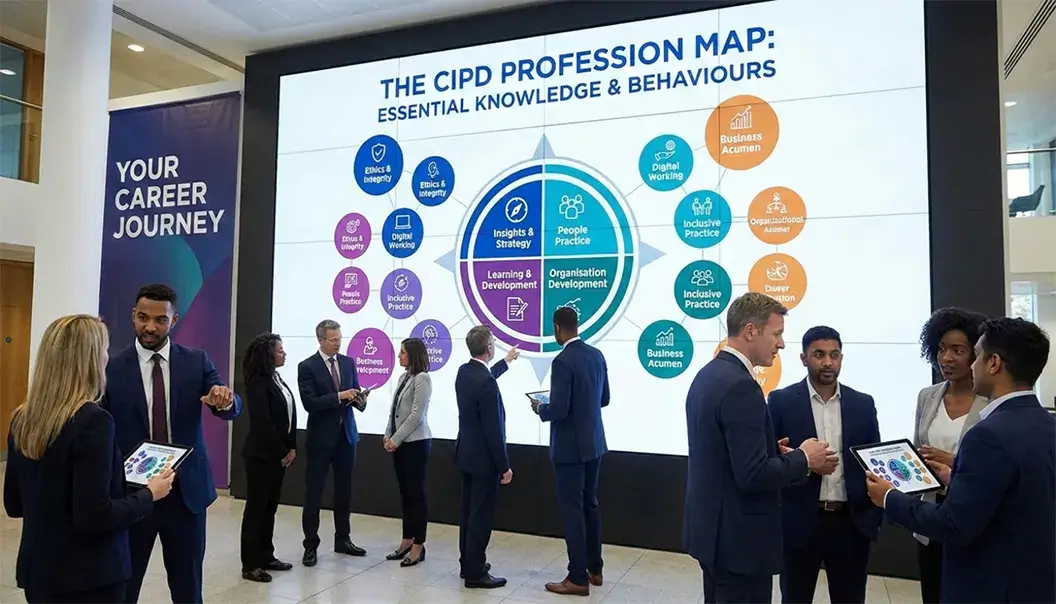
The CIPD professional map is actually a framework created by the Chartered Institute of Personnel and Development that defines knowledge, skills, and core behaviors HR and L&D professionals must have. It motivates them to enhance their skills and expertise so they can contribute to the industry.
- The knowledge HR professionals must understand.
- The behaviors they must demonstrate.
- The value they must uphold.
- The standards that are needed at different career stages.
In easy words, it shows what good HR looks like and how to grow from a beginner to a strategic leader. It is actually reviewed every two years to include the changes in the industry standards. Moreover, it leads to a shared sense of identity so that everyone works and applies the same standards and expectations.
The major focus of the CIPD HR profession map:
- Ethical practice.
- Evidence-based decision-making.
- Inclusivity and diversity.
- Business value creation
- Lifelong professional development
Why is the CIPD profession map important?
1. Provides clear career direction:
Many HR professionals are not able to understand the skills they need next. Therefore, the HR profession map gives a clear path and direction from the foundation level to advanced leadership. So they will know what is expected at different career levels. It helps them to see where they stand, where they want to reach, and what they must do to get there.
2. Sets global professional standards:
Organizations trust CIPD as it defines credible and competent HR practice. The CIPD HR profession map covers the values and behaviors required of HR professionals. It is important for ethical and evidence-based practice in the world of work. Moreover, employers use the map for recruitment criteria, performance evaluation, and learning and development planning.
3. Encourages continuous learning:
We all know that HR is not a static profession. There are new challenges, such as AI or remote work, and these challenges require constant learning. The CIPD HR profession map promotes ongoing professional growth instead of just one time qualification.
4. Builds confidence and credibility:
The CIPD career map helps HR professionals to know their strengths and weaknesses so that they can work on their skills and align them with the organization. As a result, it leads to professional integrity, strategic thinking, and evidence-based decision-making. Moreover, it increases career opportunities and leadership potential.
CIPD professional map values:
For a clear professional identity, a strong sense of shared purpose is needed. CIPD professional map values guide the HR professionals in their work. Moreover, this map is based on three core values that are important for how HR professionals should think, act, shape strategies, and make decisions for a real impact.
1. Principle led:
The decisions of HR professionals must be based on some principles. These principles serve as the foundation of ethical decision-making and set standards across the profession.
Being principle-led means that HR professionals make decisions based on ethics, professional values, fairness, integrity, and respect. A principal-led professional asks, “Is this the fair and right thing to do?”
This value matters and is important because it promotes trust and credibility, protects employee well-being and rights, encourages responsible leadership, and aligns with the ethical practice behavior in the CIPD HR profession map.
2. Evidence-based practice:
It involves making decisions based on data, research, professional expertise, and employee feedback. This prevents HR from relying on assumptions, personal opinions, and outdated practices. It matters because it improves decision accuracy, reduces bias and risks, strengthens business credibility, and supports strategic HR leadership.
An example would be introducing a policy based on data, surveys, research, or analysis. This is important for an informed decision.
3. Outcomes driven:
Outcomes-driven, meaning focusing on real organizational impact, measurable results, sustainable success, and value creation for people and business. HR professionals need to set clear objectives and measure outcomes instead of just completing tasks.
It reflects that HR is no longer administrative; it must deliver meaningful outcomes such as higher employee engagement, better productivity, and better organizational culture, etc.
It is important to align people’s strategies with organizational goals.
In summary, CIPD profession maps are built on three foundations, including acting ethically(principle-led), creating measurable value(outcome-driven), and making informed decisions using data and research(evidence-based).
What is the structure of a CIPD professional map?
The CIPD profession map is built around 3 core components:
- Core knowledge.
- Core behavior.
- Specialist knowledge.
1. Core knowledge CIPD map:
It involves the concepts that every HR and L&D professional must have, regardless of the specialization and role level. It includes 6 main areas of knowledge that are crucial for value, change and a positive impact.
People practice:
It focuses on how organizations manage, develop, and support employees from recruitment and onboarding to development, retention, and exit. The key topics of this component are:
- Talent acquisition and retention.
- Learning and development.
- Performance management.
- Employee experience.
- Well-being and engagement.
- Diversity and inclusion.
It reflects how each stage relates, so the HR professionals can manage the process effectively.
Culture and behavior:
It is based on behavioral science and covers how organizational practices shape its people and culture. It provides understanding to the HR professionals of the drivers of behaviors, so they can create inclusive work environments. This area covers team dynamics, change management, leadership influence, organizational values, and motivation and engagement.
Business acumen:
Modern HR is not about policies and procedures. As an HR professional, you must create business value. And for that, you need to understand the wider business context. This involves understanding organizational strategy, financial performance, market trends, risk management, and data and analytics. As a result, HR becomes a strategic partner rather than just administrative staff.
Analytics and creating value:
In the modern profession, data plays the most important role. It includes how analytics can lead to better business decisions, reflect the people’s values, and discover opportunities for improvement and impact.
Digital working:
In today’s era, technology has changed the workplace. This area involves how technology can be used for better productivity, collaboration, and experience. It helps HR professionals understand the significance of technology in influencing the future of work.
2. Core behavior CIPD map:
It defines how HR professionals must act and think, regardless of the experience or situation. The HR industry is always evolving. However, some mindsets and actions must be consistent with informed decisions, trust, and supporting people. Actually, these behaviors are grounded in academic research and insights from industry professionals. These behaviors reflect how effective HR practice is.
Ethical practice:
Ethics is the heart of the CIPD framework. HR professionals must act with honesty and integrity; they must protect confidentiality, promote fairness and equity, and make responsible decisions. Ethical HR builds trust between the employee and the organization.
Professional courage and influence:
HR professionals often face difficult situations such as workplace conflicts, discrimination issues, and organizational change. However, they must tackle such issues with confidence, courage, and influence leaders to make the right decisions.
Valuing people:
The sign of a successful organization is treating employees as valuable contributors and not just resources. It involves the respect for diversity, empathy and compassion, inclusive leadership, and employee well-being.
Moreover, valuing people leads to higher engagement and productivity.
Inclusive working:
Inclusion is more than just diversity numbers; it involves creating a workplace where everyone is respected and heard. HR professionals must remove bias in hiring, support equal opportunities, and encourage diverse perspectives. Inclusive workplaces are more innovative.
Passion for learning:
The HR field is evolving. Therefore, professionals must show their curiosity, openness to feedback, and continuous skill development. It leads to long-term career success.
Situational decision making:
HR decisions include complex human and business factors; professionals must analyze evidence, consider risks, and balance fairness with strategy. It shows that good judgment is important for effective people management.
Other core behaviors are: commercial drive and insights-focused.
3. Specialist knowledge:
Core knowledge applies to everyone. Specialist knowledge depends on career focus. Their specialist areas help HR professionals to understand how they can use their expertise to create a positive and meaningful impact at any level. The areas include:
- Talent management.
- Learning and development.
- Employee relations.
- Reward and compensation.
- Organizational development.
- Resourcing.
- HR analytics
- Diversity and inclusion
- Employee experience.
Professionals can choose their specialization while following their core principles.
Career levels in the CIPD profession map:
Now you must be aware of the structure of the CIPD career map. Now let’s discuss its career levels.
1. Foundational level:
It includes entry-level roles, focuses on basic knowledge and support tasks, and learning professional behaviors. The typical roles are HR assistant, HR coordinator, and administrator.
2. Associate level:
It includes greater responsibility in HR processes, the ability to work independently, and the start of strategic understanding. The roles are HR officer, recruitment specialist, and L&D coordinator.
3. Chartered member level:
The main functions are strategic contribution to business goals, leadership in people’s initiatives, and evidence-based decision-making. The roles are HR manager, business partner, or talent manager
4. Chartered fellow level:
The main functions are influencing senior leadership and organization, shaping the culture and future workforce, and mentoring other professionals. The typical roles include HR director, chief people officer, and senior consultant.
How to use the CIPD profession map?
The CIPD profession map serves as a powerful tool for HR professionals as it helps them to move forward with their careers.
1. Find your current level:
Begin by knowing your current role and experience level. The map comprises 4 levels as we have discussed before. Then look at the behaviors and knowledge areas associated with each level. Then reflect on your strengths and daily tasks. For more information, read this blog, ‘Find your level with the Profession Map.’
2. Set clear development goals:
Once you are aware of your level, identify the gap between your current abilities and the target role.
Maps make it easy to identify areas for growth and improvement. It can be a technical skill or a behavioral trait. Then set SMART goals aligning with the organizational needs.
3. Access high-quality learning sources:
CIPD provides lots of learning material, online resources, case studies, workshops, and qualifications.
These resources are aligned with the CIPD professional map. Choose resources that match specific knowledge or behaviors you have to develop.
4. Review your progress:
Regularly review your progress. It’s crucial to assess what you have achieved and where you should focus more. Utilize the CIPD career map to know whether your new responsibilities align with the next level or not. Also, seek feedback from your manager and mentor. Then, adjust your learning goals.
Final thoughts:
The CIPD profession map is more than a framework. It is a complete and full guide to becoming an effective, ethical, and strategic HR professional. It helps you to understand required skills and behaviors, plan career development, and be professionally credible. If you are serious about a career in human resources, then invest time in studying, applying, and growing through the CIPD profession map.
FAQs:
Q1. What is the CIPD profession map?
Ans. It is an international and evidence-based framework that defines the knowledge, behaviors, and values needed by hr and l&d professionals to excel.
Q2. What are the CIPD map core behaviors?
Ans. It defines the effective mindsets and actions needed for effective, ethical, and evidence-based HR practice. It covers 8 key areas.
Q3. What is the CIPD profession map’s core knowledge?
Ans. It has six essential and research-based areas of expertise required for hr and l&d professionals for effective, ethical, and evidence-based practice.
Q4. Why is the CIPD professional map important?
Ans. It serves as the standard for the people’s profession. It covers the knowledge, behaviors, and values that are needed for change and enhancing organizational performance.
Q5. When was the CIPD profession map created?
Ans. It was launched in November 2018 with three years of research and consultation with over 19,000 people to define modern standards for HR and L&D professionals.

